Introduction
Choosing the right cable reel servicing company directly impacts production uptime, equipment longevity, and total cost of ownership for wire and cable manufacturers. Poor servicing leads to premature reel failure, increased downtime, safety hazards, and higher replacement costs.
Industry data shows that unplanned downtime costs industrial manufacturers between $10,000 and $500,000 per hour, with equipment failures accounting for roughly 42% of all unplanned stoppages.
This guide helps manufacturers compare companies by their technical capabilities, experience, turnaround time, and cost-effectiveness. The right partner delivers fewer emergency repairs, longer equipment life, and predictable production schedules.
Key Takeaways
- Professional servicing extends reel life by 50-70% through reconditioning, repair, welding, and balancing
- Choose providers with wire industry experience, in-house capabilities, and predictable turnaround times
- Specialized reel companies outperform generic fabricators on quality and technical expertise
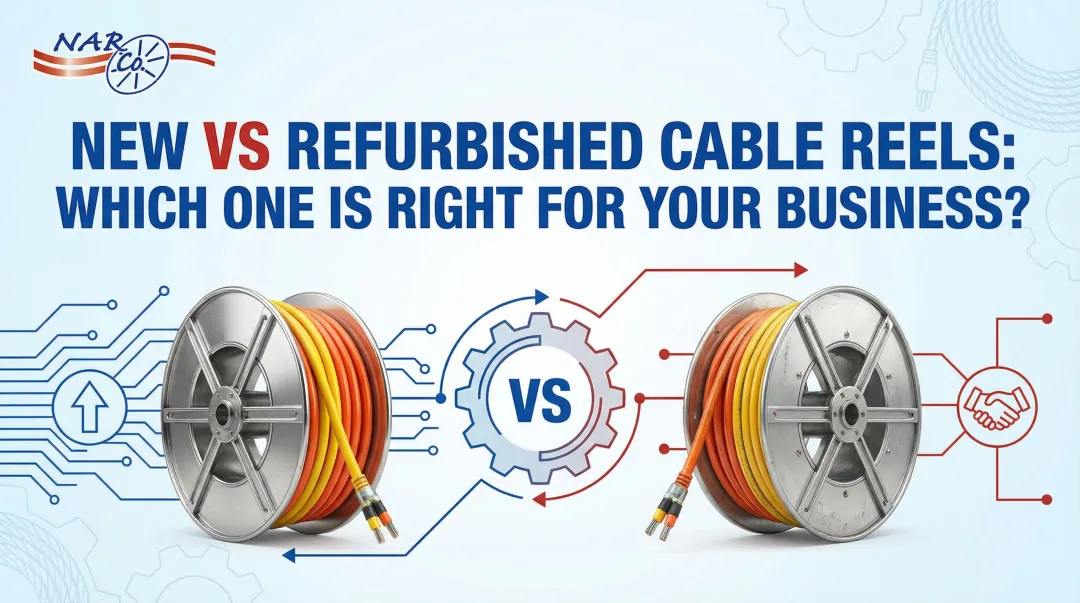
- Reconditioning costs 50-65% less than buying new reels
- Top partners offer proactive maintenance recommendations and custom solutions
What is Cable Reel Servicing?
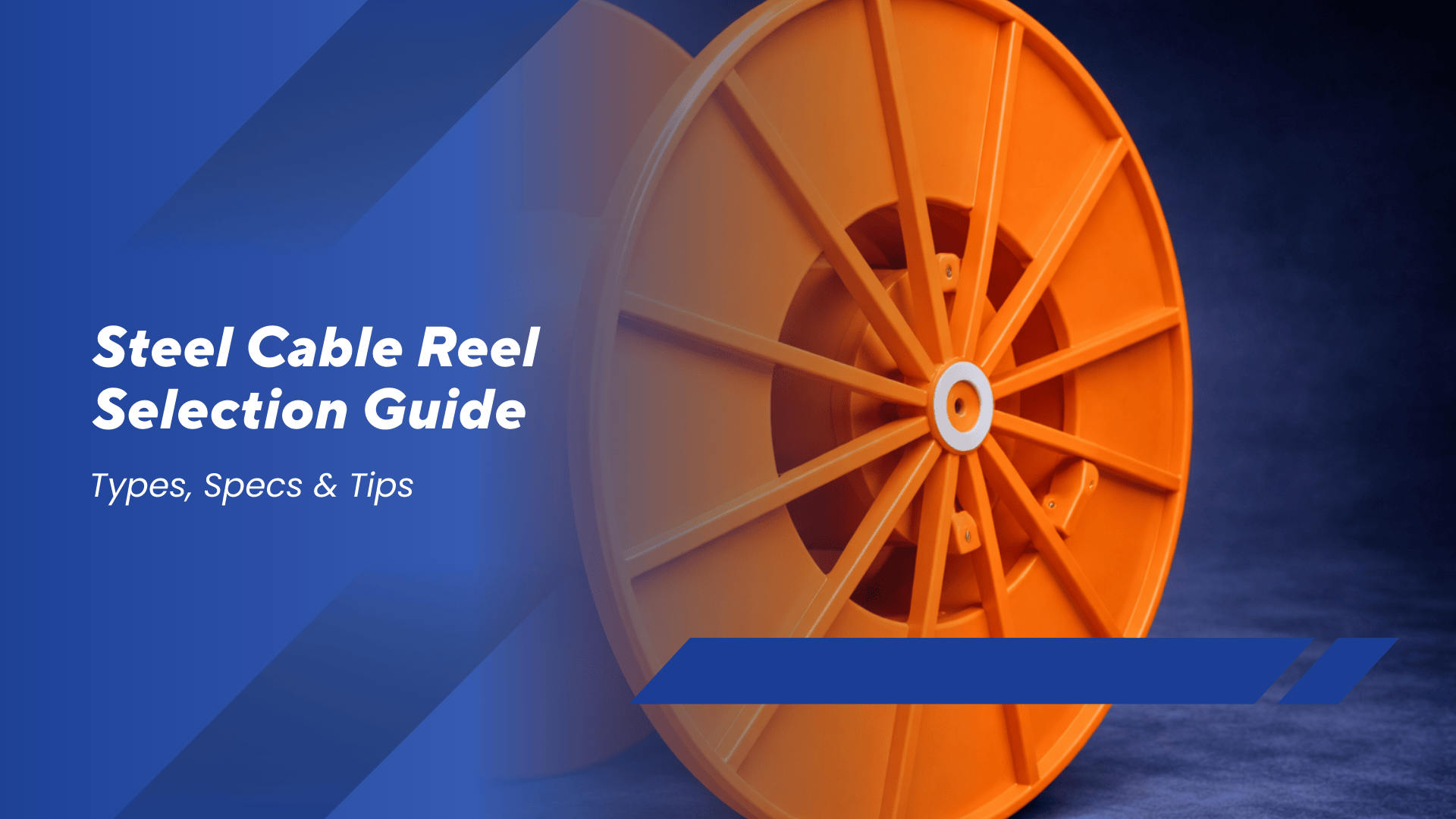
Cable reel servicing is the comprehensive process of inspecting, repairing, reconditioning, and restoring steel wire reels, bobbins, and spools to extend their functional life and maintain safety standards.
Wire handling equipment faces unique stresses—tension loads, rotation cycles, and environmental exposure—that cause structural damage, wear, and performance degradation over time.
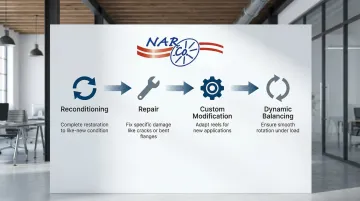
Servicing includes several distinct approaches:
- Reconditioning: Restoring to like-new condition through comprehensive refurbishment
- Repair: Fixing specific damage like cracks or bent flanges
- Custom modification: Adapting reels for new applications
- Dynamic balancing: Ensuring smooth rotation under load to prevent vibration damage
Core Components of Cable Reel Servicing
Effective reel servicing requires a combination of specialized skills, equipment, and quality control processes working together to restore functionality and safety. Each component addresses specific failure modes that occur during normal wire manufacturing operations.
Structural Repair and Welding
Structural repair involves fixing cracks, reinforcing weak points, replacing damaged flanges or drum sections, and ensuring integrity through certified welding processes. AWS D1.1 Structural Welding Code—Steel sets the authoritative standards for materials, design, fabrication, and inspection of welded steel structures.
Competent repair must respect original load capacity and operating speed requirements to ensure the reel remains safe for its intended use.
Machining and Precision Work
Machining services restore proper dimensions, repair bearing surfaces, true up flanges, and ensure reels meet tolerance specifications required for smooth wire winding operations.
Key machining tasks include:
- Correcting dimensional drift
- Restoring arbor surfaces to specification
- Repairing drive pin holes with precision tolerances
Proper machining prevents uneven winding, vibration, and premature wear on downstream equipment.
Surface Treatment and Finishing
Surface treatment includes rust removal, surface preparation, protective coating application, and dynamic balancing. Approximately 80% of coating failures stem from inadequate surface preparation, making proper blasting critical.
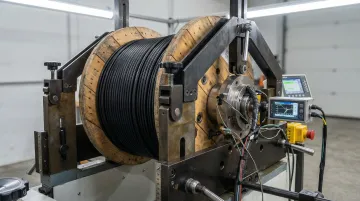
Dynamic balancing to ISO 1940-1 standards prevents vibration issues that can damage wire products or cause equipment failure during high-speed operations.
Benefits of Cable Reel Servicing for Wire and Cable Manufacturers
Professional reel servicing delivers measurable operational benefits:
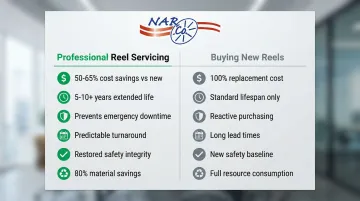
- Cut costs 50-65% compared to purchasing new reels
- Add 5-10+ years to equipment service life
- Prevent emergency downtime through proactive reconditioning
- Predictable turnaround times keep production schedules on track
- Restore structural integrity for safer workplace operations
- Save 80% of materials and 85% of energy compared to new production
- Preserve custom specifications that manufacturers no longer offer
What to Consider When Choosing a Cable Reel Servicing Company
Not all servicing providers offer the same level of expertise. Selecting the wrong partner can result in subpar repairs, repeated failures, and higher long-term costs. The following factors help manufacturers connect servicing capabilities to measurable business outcomes like reduced downtime, lower total cost of ownership, and improved equipment reliability.
Industry-Specific Experience and Specialization
Experience specifically with wire reels matters because generic metal fabricators lack understanding of load requirements, wire handling dynamics, balance specifications, and industry safety standards. Wire reels face unique combined stresses—pulling, bending, squeezing, and friction—that shift failure mechanisms from overall stress to localized damage as wear progresses.
Critical damage often occurs internally (core crushing, internal wire breaks) which requires specialized inspection protocols to detect.
Specialized providers understand these unique stressors and can proactively identify failure points before they become critical.
Seek providers with 10+ years in the wire industry and memberships in relevant trade organizations like Wire Association International as indicators of credibility and ongoing industry engagement.
Technical Capabilities and Service Range
Comprehensive in-house capabilities—welding, machining, fabrication, balancing—ensure quality control, faster turnaround, and accountability under one roof rather than outsourcing critical steps.
Providers with in-house capabilities offer direct control over scheduling and quality, minimizing delays associated with subcontractors.
Custom fabrication capabilities indicate a provider can handle non-standard repairs, adapt reels for new applications, or manufacture replacement components when original parts are obsolete. The ability to perform dynamic balancing is crucial for high-speed wire operations and indicates investment in specialized equipment and technical expertise.
Turnaround Time and Service Flexibility
Turnaround time directly impacts your production schedule and inventory carrying costs. Unreliable repair turnaround times force planners to constantly re-sequence orders and hold excess safety stock, tying up capital and reducing operational flexibility. Faster service means less backup inventory required and reduced production disruption.
Flexible scheduling—rush services, off-hours work, on-site repair options—demonstrates a provider's commitment to minimizing your downtime and adapting to your operational needs. Predictability of return dates is often more valuable than speed alone, as it allows accurate production scheduling.
Quality Standards and Workmanship Guarantees
Documented inspection processes, before/after documentation, load testing, warranty on repairs, and willingness to stand behind their work are essential indicators of quality.
All welds should undergo visual inspection according to ISO 17637, checking for profile, dimensions, and surface imperfections. For critical structural welds, Non-Destructive Testing methods like Magnetic Particle Testing or Penetrant Testing should detect surface-breaking defects.
Reputable providers should explain their quality control process, provide references from similar manufacturers, and offer warranties demonstrating confidence in their workmanship.
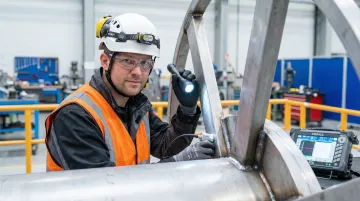
Proof load testing typically involves applying tension at 60% of rated breaking strength to verify integrity without destroying the component.
Cost Transparency and Value Proposition
Clear, itemized quotes that break down labour, materials, and additional services allow you to compare providers on an apples-to-apples basis. Reel size, load rating, extent of fabrication, precision of machining, and surface coating type drive pricing.
Understand the difference between "lowest price" and "best value"—the cheapest option may use inferior materials, skip critical steps, or result in shorter service life that costs more in the long run. Ask providers to explain their cost structure and how their pricing relates to service quality, turnaround time, and expected reel life extension.
Geographic Proximity and Logistics
Location matters for transportation costs, turnaround time, and feasibility of on-site consultations or emergency services. Transportation is a major cost component for heavy industrial reels, influenced by weight, dimensions, and the need for specialized trailers. Regional providers may better understand local industry conditions, offer faster response times, and provide more personalized service than distant national companies.
Proximity enables on-site assessments before repair, reducing the risk of misdiagnosis and unnecessary transportation of heavy equipment. Shorter transportation lead times allow manufacturers to operate with leaner inventory levels.
How NARCo Can Help
NARCo is a specialized cable reel servicing provider with over 25 years of experience in wire reel reconditioning, repair, and custom fabrication. Founded in 1999, the company is based in Antwerp, Ohio.
The company serves wire and cable manufacturers throughout the entire U.S, offering complete in-house capabilities to extend reel life and reduce total cost of ownership.
When choosing a cable reel servicing partner, NARCo's in-house capabilities—from structural welding to precision machining to dynamic balancing—eliminate quality control risks and scheduling delays common with providers who outsource critical work.
Core Capabilities
- 25+ years specializing in wire industry reel reconditioning and repair
- Member of Wire Association International
- Complete in-house welding and machining for quality control and faster turnaround
- Custom fabrication and design services for unique applications
- Dynamic balancing services for high-speed operations (ISO 1940-1 certified)
Service Advantages
- Nationwide distributor of steel and composite reels (new reel options available)
- Competitive pricing backed by quality commitment
- Direct access to experienced technicians who understand wire manufacturing challenges
Conclusion
Choosing the right cable reel servicing company impacts equipment longevity, production reliability, and long-term cost management. The goal isn't finding the most convenient or cheapest option—it's selecting a specialized partner whose technical capabilities and industry experience align with your operational needs.
Cable reel servicing works best as part of a continuous maintenance approach. Regular inspections, proactive reconditioning, and a relationship with an experienced partner prevent costly failures and extend your reel fleet's life by years or decades. Implementing predictive and proactive maintenance strategies can reduce downtime by 30-50% and extend equipment life by 20-40%, delivering measurable returns on your servicing investment.
Companies like NARCo, with over 25 years specializing in wire reel reconditioning and repair, demonstrate how dedicated expertise in welding, machining, and custom fabrication translates to longer equipment lifecycles and reduced operational disruptions.
Frequently Asked Questions
How much does cable reel servicing cost?
Servicing costs typically range from $200-$2,000+ per reel based on size, damage extent, and required services. Industry data shows reconditioning costs 50-65% of new reel replacement, making it cost-effective for reels with intact structural integrity.
How long does cable reel servicing typically take?
Standard servicing takes 1-3 weeks depending on scope and workload, while rush services offer 2-5 day turnaround at premium pricing. Discuss timelines upfront to align with your production schedules.
What's the difference between reel reconditioning and reel repair?
Repair addresses specific damage or failure points like fixing a crack or replacing a bearing. Reconditioning is a comprehensive restoration process that brings the entire reel back to like-new condition through structural repair, machining, surface treatment, and balancing.
When should I repair a reel vs buying a new one?
Consider repair or reconditioning when structural integrity is intact and costs stay below 50% of new reel price. Replace severely damaged reels, obsolete designs no longer meeting operational needs, or when newer models offer significant improvements.
What certifications should a cable reel servicing company have?
Formal certifications are less common in reel servicing, but prioritize providers with AWS welding certifications and Wire Association International membership. References from wire and cable manufacturers in your sector provide the best verification of capabilities.
Can all types of cable reels be serviced or reconditioned?
Most steel wire reels, bobbins, and spools can be serviced regardless of manufacturer or age. Severely corroded or structurally compromised reels may not be cost-effective to restore—specialized providers like NARCo offer initial inspections to assess serviceability and recommend the most economical path forward.