A damaged or mishandled cable reel can stop an entire production line. It can also cause worker injuries, cable loss, and costly downtime. Many of these problems happen not from faulty equipment but from simple handling mistakes.
Cable reels look sturdy, but they need care during lifting, transport, and storage. Knowing what to do and what to avoid keeps your team safe and extends the life of every reel.
This guide gives you clear do’s and don’ts for daily cable reel use. You will learn how to inspect, move, store, and unwind reels correctly and see why small precautions make a big difference.
When followed consistently, these practices help your operation reduce repair costs, prevent accidents, and keep work flowing without interruption.
Quick Takeaways Table: Cable Reel Do’s and Don’ts
Area | Do | Don’t |
Inspection | Check flanges, bolts, and labels before use | Ignore damage or missing tags |
Lifting | Use forklifts, cranes, or hoists | Lift by hand, flange, or cable |
PPE | Wear gloves, boots, and safety glasses | Handle reels without protection |
Transport | Secure reels with chocks and straps | Move unblocked or roll manually |
Storage | Store upright, dry, spaced, and off the ground | Stack tightly or cover with plastic |
Unreeling | Fully unwind cable before powering | Leave cable partially coiled |
Operation | Keep tension steady and avoid sharp bends | Pull or twist cable abruptly |
Power Use | Use GFCI in damp areas | Ignore electrical safety checks |
Maintenance | Inspect reels after each use | Skip scheduled maintenance |
Why Reel Safety Matters in Daily Operations
Cable reels hold valuable materials that power your business. Treating them properly protects both your investment and your people.
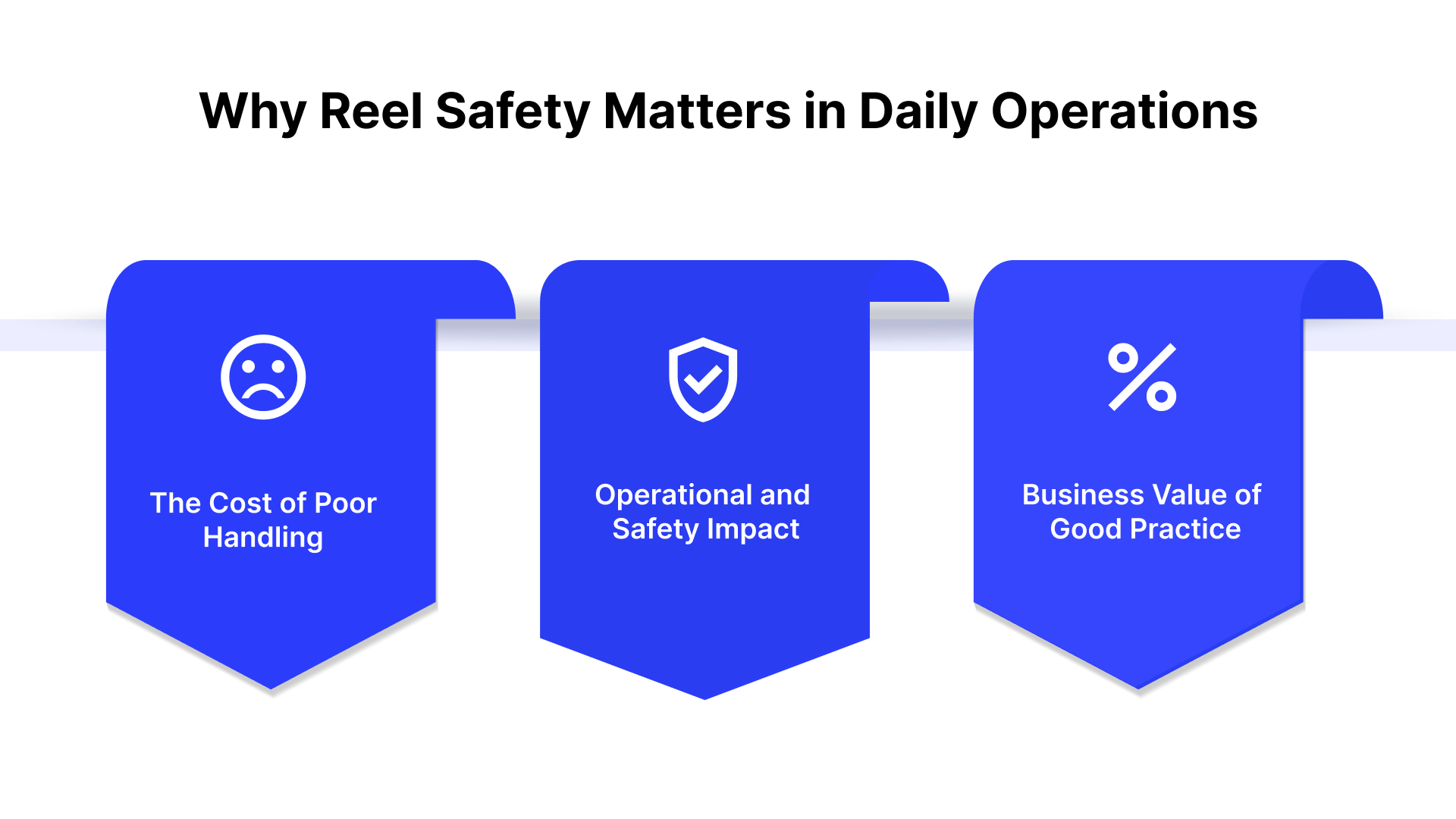
1. The Cost of Poor Handling
Bent flanges and cracked barrels reduce reel strength and make winding uneven.
Damaged cable layers cause short circuits or insulation failure.
Improper storage leads to corrosion, moisture entry, and cable contamination.
Each of these issues adds avoidable cost, from lost materials to downtime and safety claims.
2. Operational and Safety Impact
Safe handling prevents cable kinks that slow line payout.
Correct stacking and blocking reduce fall risks in storage areas.
Routine inspection identifies weak bolts, loose hubs, and worn labels before failure occurs.
3. Business Value of Good Practice
Less product waste and fewer returns
Lower maintenance spending
Better employee safety records
Longer life for reusable steel reels
When safety becomes routine, efficiency follows. The right practices save money, protect your workforce, and help your facility meet quality and compliance standards.
Do’s - Best Practices for Cable Reel Use
Proper use keeps reels safe, cables intact, and production lines running smoothly. Follow these best practices before, during, and after every operation.
1. Pre-Use Inspection and Compatibility Check
Before using a reel, take a few minutes to inspect it. Small checks prevent major losses later.
Do:
Examine flanges, bolts, and the barrel for cracks or dents.
Check the arbor hole for wear or deformation.
Verify that the reel matches the cable’s load, length, and environmental rating.
Read the manufacturer’s labels and confirm maintenance dates.
Replace any reel that feels unbalanced or has missing hardware.
Inspecting reels at delivery and before each use helps detect early damage and supports safe winding and payout.
2. Safe Lifting, PPE, and Movement
Handling reels safely protects both people and equipment.
Do:
Use a forklift, crane, or hoist, never lift manually.
Insert forks under the core, not against the cable.
Secure reels with blocking or chocks before transport.
Wear steel-toed boots, gloves, and safety glasses at all times.
Keep pathways clear to prevent collisions.
Mechanical lifting combined with proper protective gear reduces strain injuries and prevents real distortion.
3. Storage Best Practices
Correct storage keeps reels stable and cables dry.
Do:
Store reels upright on level ground with wedges or chocks.
Keep reels off the ground using pallets or rails to avoid moisture.
Maintain clear spacing between reels for ventilation.
Place them away from water, chemicals, sunlight, and heat sources.
Use shelters or covered areas for long-term storage.
These steps preserve structural integrity, prevent corrosion, and protect cable insulation.
4. Proper Unreeling and Cable Handling
Unreeling determines how safely current flows and how long cables last.
Do:
Fully unreel the cable before powering medium or high loads.
Keep positive tension during payout to avoid slack or loops.
Avoid sharp bends that stress insulation.
Use mechanical pay-off stands for large or heavy reels.
Guide cable in a straight line to prevent twisting or abrasion.
Controlled payout avoids overheating, reduces friction, and improves winding accuracy when reusing reels.
5. Operational Safety and Power Use
Electrical safety starts with correct setup and awareness.
Do:
Connect equipment only after cables are fully extended.
Use GFCI protection outdoors or near damp areas.
Keep cables away from water, traffic, or moving machinery.
Disconnect power before moving or rewinding any reel.
Train staff on emergency cut-off procedures.
Consistent application of these habits prevents short circuits, electrocution, and cable failure during high-load operations.
Following these do’s builds a safer workplace and extends the service life of every reel and cable in your plant.
Don’ts - Common Mistakes That Cause Damage
Even small handling errors can damage cable reels and interrupt production. Avoid these mistakes to protect both equipment and workers.

1. Handling Errors
Don’t drop or drag reels.
Impact breaks flanges and loosens bolts. Dragging wears down the barrel and outer cable layers.
Don’t lift reels by the flange or cable loops.
Always lift from the core using approved lifting tools. Lifting incorrectly bends the reel and stresses the cable inside.
Don’t roll loaded reels manually.
Heavy reels need mechanical movement. Manual rolling leads to loss of control and workplace injuries.
Don’t move reels without blocking or securing them.
Unchoked reels shift during transport and can cause impact damage or falls.
Don’t ignore PPE.
Workers must wear gloves, boots, and safety glasses whenever handling reels.
Proper handling protects the reel’s balance and prevents cable insulation damage that leads to costly failures later.
2. Storage Mistakes
Don’t expose reels to water, chemicals, or sunlight.
Moisture corrodes steel, weakens wood, and damages cable sheathing.
Don’t store reels in high-heat zones.
Heat softens insulation and affects winding tension.
Don’t stack reels too close together.
Tight stacking causes surface dents and makes removal unsafe. Maintain clear space for forklifts and ventilation.
Don’t cover reels with tarps or plastic sheets.
Trapped moisture promotes corrosion and mold.
Don’t store damaged reels near active production areas.
They can collapse under load or contaminate nearby cables.
Safe storage preserves both cable performance and operator safety.
3. Operational Misuse
Don’t leave cables partially coiled during use.
A coiled cable under load overheats and can melt or short-circuit. Always unwind the full length for proper current flow.
Don’t overload cables beyond rated capacity.
Overloading creates excessive heat and damages both cable and reel.
Don’t ignore maintenance labels or service records.
They contain vital information about inspection dates, load limits, and repair needs.
Don’t bend or twist cables excessively during payout.
Excess bending stresses the conductor and reduces flexibility.
Don’t skip the end-of-use inspection.
Checking for wear after every cycle helps you plan maintenance before problems appear.
Operational discipline ensures that each reel stays safe, balanced, and ready for reuse.
Industry Safety and Maintenance Standards
Cable reels must meet specific handling and manufacturing standards to ensure consistent safety and performance. Following these standards protects both your workforce and your investment.
Key Industry Standards
DIN 46395 and DIN 46397
Define design, flange structure, and machining precision for metal reels used in wire and cable manufacturing. These standards guarantee balance and durability for repeated use.
NEMA WC 26
Specifies construction and testing requirements for corrugated and shipping reels. Compliance ensures reels can handle heavy cable loads without distortion.
OSHA Handling Guidelines
Focus on safe lifting, transport, and workplace ergonomics. These guidelines protect employees from back injuries, crush hazards, and falls when moving heavy reels.
Maintenance and Compliance
Following standards matters only when combined with regular inspection.
Check reels for flange cracks, rim distortion, or worn arbor holes.
Repaint or recoat surfaces after blasting to prevent corrosion.
Verify that each reel’s label and tare weight are visible.
Maintain dynamic balance through periodic testing.
Plants that align with these maintenance standards see fewer workplace incidents and lower downtime. Partnering with a qualified repair specialist ensures each reel continues to meet safety codes even after years of use.
Narco provides reconditioning and fabrication services that meet DIN and NEMA standards, helping manufacturers maintain reliable, compliant equipment across their operations.
Conclusion
Safe cable reel handling is more than a routine task. It is a system that protects people, cables, and your bottom line.
When teams follow the right dos and don’ts every day, they reduce risk, avoid unnecessary costs, and keep operations moving without disruption.
Every step you take to protect your reels adds years to their service life. Regular maintenance and proper storage also reduce the need for costly replacements.
Narco supports manufacturers through:
Steel Reel Repair and Reconditioning
Custom Fabrication and Refurbishment
Steel Reel Warehousing & Storage
Steel Reel Inventory Support
If your facility manages cable reels daily, Narco can help you improve safety, reduce waste, and extend equipment life.
Contact our team to schedule a reel inspection, repair, or storage consultation tailored to your operation.
FAQs
1. How often should cable reels be inspected?
Inspect reels before each use and after every transport. Look for flange cracks, bent rims, and missing labels. Regular checks prevent handling accidents and cable damage.
2. What causes cable reels to overheat during use?
Cables left partially coiled trap heat, especially under load. Always unwind the full length before powering on to maintain safe operating temperatures.
3. Can damaged steel reels be repaired instead of replaced?
Yes. Reconditioning services can straighten flanges, repair rims, and restore balance. Narco offers a compliant reel repair to extend reel life safely.
4. What is the best way to store reels outdoors?
Store them upright on a dry surface, chocked, and covered with weather-resistant shelters. Avoid direct sunlight or ground contact.
5. How can improper stacking cause accidents?
Tightly stacked reels may roll or fall during movement, causing impact injuries or cable damage. Always keep clear spacing between stored reels.