Introduction
Cable reels are critical equipment in wire and cable manufacturing operations, where proper maintenance directly impacts productivity, safety, and equipment ROI. These workhorses face extreme conditions—constant tension cycles, heavy loads, and exposure to metal debris and lubricants.
Neglecting cable reel maintenance leads to costly consequences:
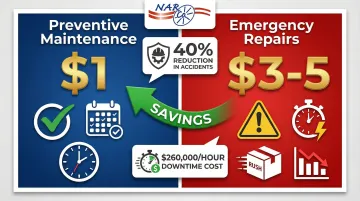
- Unexpected downtime averaging $260,000 per hour in manufacturing facilities
- Emergency repairs costing 3-5x more than planned maintenance
- Safety hazards from cable failures
- Premature equipment replacement requiring capital investment
According to industry research, equipment failures account for 42% of all manufacturing downtime, making preventive maintenance a critical operational priority.
This guide covers the importance of maintenance, different maintenance approaches, warning signs that service is needed, and practical scheduling guidelines to maximize reel lifespan and protect your operational investment.
Key Takeaways
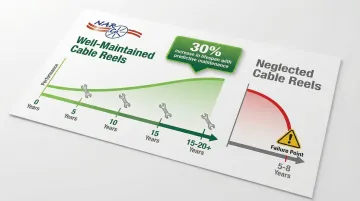
- Proper maintenance extends reel life from 5-8 years to 15-20+ years
- Use routine inspections, repairs, monitoring, and overhauls together
- Monitor for unusual noises, wear, performance drops, and power spikes
- Schedule daily checks, weekly inspections, monthly cleaning, annual servicing
- Professional reconditioning restores reels to like-new condition at a fraction of replacement cost
Why Maintenance of Cable Reels Is Important
Cable reels in wire manufacturing environments endure punishing conditions that make maintenance non-negotiable.
Performance and Operational Efficiency
Proper maintenance directly impacts how your cable reels perform daily. Well-maintained reels deliver:
- Smooth cable winding and unwinding
- Consistent tension control that prevents product damage
- Reduced friction losses that save energy
- Reliable power delivery to moving equipment
When maintenance lapses, operators struggle with uneven winding, increased effort to deploy cable, and inconsistent tension that can damage wire products.
Lifespan and Replacement Cycles
Well-maintained reels can last 15-20+ years in industrial service, while neglected equipment typically fails within 5-8 years. The difference between maintained and neglected equipment is dramatic. Companies implementing predictive maintenance strategies report a 30% increase in equipment lifespan, according to research on industrial rotating equipment. This extended service life translates directly to lower capital expenditure and reduced replacement frequency.
Safety and Compliance
Maintenance plays a critical role in workplace safety. Proper upkeep:
- Prevents cable failures that could cause electrical hazards
- Ensures spring mechanisms don't fail unexpectedly causing injury
- Maintains proper grounding to prevent shock risks
- Keeps operations compliant with OSHA 29 CFR 1910.147 (Lockout/Tagout) standards
Equipment failures can result in severe injuries, particularly from stored mechanical energy in springs and electrical hazards in slip rings.
Cost Savings: Preventive vs. Reactive
The financial case for preventive maintenance is compelling. Planned maintenance costs approximately $1 for every $3-5 spent on emergency repairs. Emergency repairs escalate costs by 300-500% due to overtime labor, expedited parts shipping, and production losses.
Accident rates drop by up to 40% when maintenance occurs during planned downtime rather than emergency conditions. For facilities where unplanned downtime costs $260,000 per hour, preventive maintenance delivers immediate ROI.
Types of Maintenance for Cable Reels
Effective cable reel maintenance requires a multi-layered approach, combining different strategies based on equipment criticality, usage patterns, and operational demands.
Routine / Preventive Maintenance
Scheduled preventive tasks form the foundation of any maintenance program. Regular inspections and servicing keep reels operating smoothly.
Visual and mechanical checks include:
- Inspect cables for fraying, kinking, or jacket damage
- Verify mounting bolt tightness and structural integrity
- Check cable alignment on the drum
- Test rotation smoothness without binding
- Examine guide rollers for wear or damage
Regular servicing tasks include:
- Lubricate bearings and pivot points where applicable
- Clean debris from moving parts and cable paths
- Inspect spring tension indicators
- Clean collector rings and brushes
- Verify electrical connections remain secure and corrosion-free
Routine maintenance is sufficient for reels in moderate-duty applications with predictable usage patterns, proper environmental conditions, and no signs of accelerated wear.
Corrective / Reactive Maintenance
Corrective maintenance addresses problems after they occur—equipment failures, performance degradation, safety concerns, or damage from improper use.
While sometimes unavoidable, relying too heavily on reactive maintenance creates significant risks:
- Emergency repairs cost 3-5x more than planned maintenance
- Extended downtime disrupts production schedules
- Potential safety incidents endanger personnel
- Chain-reaction failures affect other connected equipment
This is why proactive monitoring matters. By tracking equipment condition, you can schedule maintenance before problems escalate.
Predictive / Condition-Based Maintenance
Predictive maintenance (PdM) uses condition monitoring to achieve a 50% reduction in unplanned downtime and a 30% increase in equipment lifespan.
This data-driven approach tracks:
- Cable wear patterns and degradation rates
- Spring tension degradation over time
- Electrical resistance in collector assemblies
- Operational hours and cycle counts
- Vibration analysis for bearing condition
- Thermal imaging for overheating components
By monitoring these indicators, you can schedule maintenance before failure rather than following fixed calendar schedules or waiting for breakdowns.
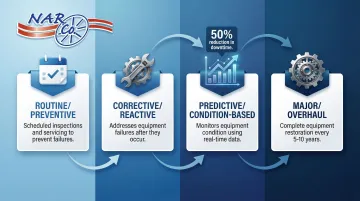
Major / Overhaul Maintenance
Deep servicing involves complete reel restoration and should occur every 5-10 years or when multiple components show wear.
Major overhauls include:
- Complete disassembly for thorough inspection
- Bearing replacement
- Spring motor replacement or restoration
- Cable replacement
- Structural repairs and welding
- Repainting and corrosion treatment
- Dynamic balancing for smooth operation
Professional reconditioning services like those offered by NARCo can restore reels to like-new condition, extending service life 10+ years at a fraction of replacement cost.
How to Check If Cable Reels Need Maintenance
Catching cable reel problems early prevents costly downtime and equipment failure. Watch for these warning signs that indicate your reels need attention.
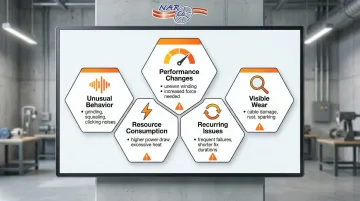
Performance or Output Changes
Watch for these efficiency indicators:
- Uneven cable winding or bunching on one side of the drum
- More force needed to deploy or retract cable than usual
- Slower operation speeds than normal
- Inconsistent tension during cable payout
- Difficulty maintaining proper cable alignment
- Variable resistance during rotation at certain points
Unusual Behavior or Operation
Abnormal sounds and sensations signal developing problems:
- Grinding or scraping noises indicate bearing wear
- Squealing sounds suggest dry pivot points needing lubrication
- Clicking noises point to damaged springs or ratchets
- Excessive vibration during operation signals imbalance or misalignment
- Cable binding or catching during winding
- Jerky motion instead of smooth rotation
Visible Wear or Damage
Physical inspection reveals critical issues:
- Cable jacket damage or exposed conductors
- Rust or corrosion on frame components
- Cracked or damaged cable guide rollers
- Loose or missing hardware
- Worn drum wrapper segments
- Sparking at collector assemblies
- Burnt or discolored electrical connections
- Intermittent power delivery to connected equipment
Increased Resource Consumption
Declining efficiency signals internal problems:
- Higher power draw to operate motorized reels
- Increased friction requiring more force for manual operation
- Excessive heat generation in bearings or collectors
- Same workload requiring more energy input
Recurring Issues or Downtime
Patterns of escalating problems demand comprehensive maintenance:
- Temporary fixes lasting shorter periods each time
- Minor issues becoming more frequent
- Increasing time spent on cable reel troubleshooting
- Same component failing multiple times
- Quick fixes no longer working effectively
When recurring issues appear, comprehensive professional maintenance is needed rather than continued temporary repairs.
Cable Reel Maintenance Schedule (General Guidelines)
Maintenance schedules must be customized based on usage intensity, environmental conditions, and equipment criticality. Use these guidelines as a starting framework.
Maintenance Frequency Table
| Interval | Tasks | Notes |
|---|---|---|
| Daily/Per-Use | Visual inspection for obvious damage; verify smooth rotation; check cable alignment and condition; confirm mounting stability | Critical for production-essential reels in continuous operation |
| Weekly | Clean debris from reel and cable path; inspect cable for wear or damage; check hardware tightness; test spring tension indicators; verify electrical connections | Standard for moderate-use equipment |
| Monthly/Quarterly | Lubricate bearings and pivot points (if applicable); deep clean collector assemblies; inspect internal components through access panels; check cable routing and guides; document wear patterns | Quarterly sufficient for low-use backup equipment |
| Annual | Professional inspection and servicing; bearing replacement if needed; cable replacement based on wear; spring motor inspection or replacement; structural integrity assessment; dynamic balancing | Essential for all reels regardless of usage |
Adjusting Schedules for Your Operation
The baseline schedule above works for moderate-use equipment in controlled environments. Adjust maintenance frequency based on these factors:
High-usage operations:
- 3-shift manufacturing and continuous operations require more frequent attention
- Move weekly tasks to every 3-4 days
- Move monthly tasks to every 2-3 weeks
- Monitor wear patterns closely to catch issues early
Harsh environment exposure:
- Outdoor, corrosive, or dusty conditions accelerate maintenance needs by 30-50%
- Moisture, chemicals, or high dust levels demand more frequent cleaning
- Inspect for accelerated degradation at shorter intervals
- Consider protective covers or enclosures when possible
Low-usage intermittent operations:
- Can extend intervals slightly between routine tasks
- Never skip annual professional servicing
- Components degrade even when idle due to environmental factors
Conclusion
Cable reel maintenance is a strategic investment, not an operational expense. Proper maintenance prevents the catastrophic failures that shut down production lines and create safety hazards, while extending equipment life from 5-8 years to 15-20+ years.
The right maintenance approach balances cost, reliability, and uptime by combining routine inspections with predictive monitoring and scheduled overhauls.
This optimizes total cost of ownership while maintaining the safety compliance essential for protecting your workforce.
When reels show significant wear but structural integrity remains sound, professional reconditioning services offer exceptional value. Specialists like NARCo, with over 25 years of experience in steel reel reconditioning, can restore equipment to like-new condition through comprehensive services including flange straightening, rim repairs, dynamic balancing, and custom fabrication work.
This approach extends service life 10+ years at a fraction of replacement cost.
Frequently Asked Questions
Why do you always need to unwind a cable reel fully?
Fully unwinding prevents dangerous heat buildup in coiled cables under load—cables in four layers require derating to just 35% of normal ampacity to prevent insulation melting and fire hazards. Partial unwinding also creates uneven spring tension that accelerates wear.
How often should cable reels be inspected for maintenance needs?
Production-critical reels need daily visual checks and weekly detailed inspections. Moderate-use equipment requires weekly detailed inspections, while backup reels need monthly comprehensive reviews. All equipment should receive annual professional servicing regardless of usage level.
What are the most common causes of cable reel failure?
Top failure modes include cable damage from improper handling, bearing failure from lack of lubrication (up to 55% of rotary machinery failures), spring motor breakage from over-tensioning, and collector wear from contamination. Most failures are preventable through proper maintenance.
Can damaged cable reels be repaired or should they be replaced?
Most component failures are repairable—bearings, springs, cables, and collectors can be replaced or reconditioned to restore like-new condition. However, structural frame damage like severe cracks, catastrophic deformation, or compromised welds typically warrants replacement. Contact reconditioning specialists to evaluate cost-effectiveness.
How long do cable reels typically last with proper maintenance?
With rigorous maintenance programs, industrial cable reels last 15-20+ years. Moderate maintenance extends life to 8-12 years, while minimal maintenance results in 5-8 years of service. Harsh environments and heavy usage reduce these timeframes by 30-50%. High-quality reels with premium components can achieve even longer service lives when properly maintained.
What safety precautions should be taken during cable reel maintenance?
Always disconnect electrical power per OSHA 29 CFR 1910.147 and use lockout/tagout procedures. Relieve all spring tension before disassembly—never disassemble spring motor canisters without proper training due to extreme stored energy. Wear appropriate PPE and have electrical work performed by qualified electricians following NFPA 70E standards.