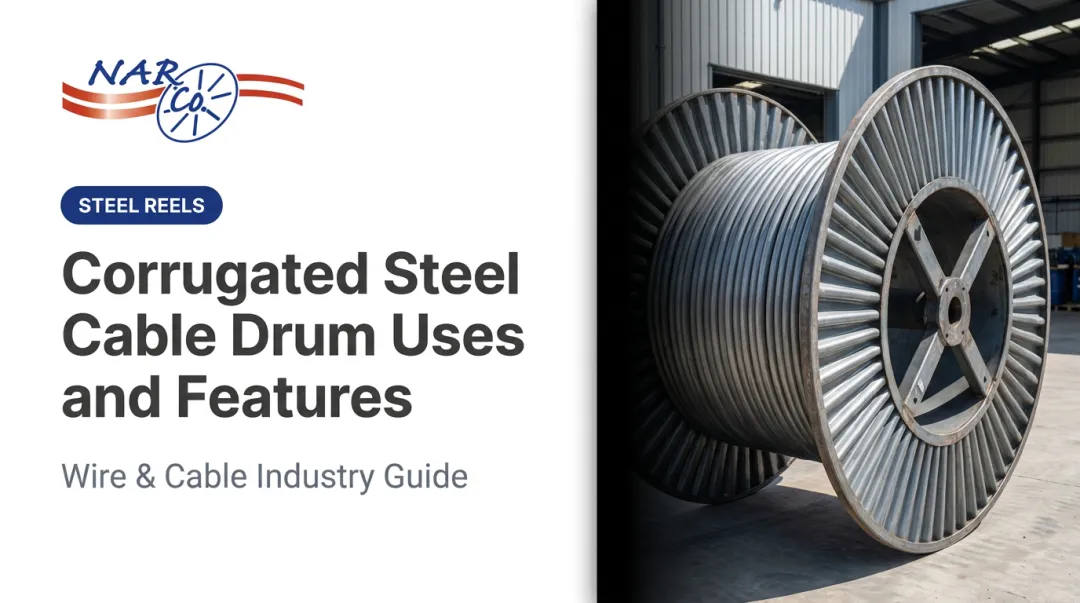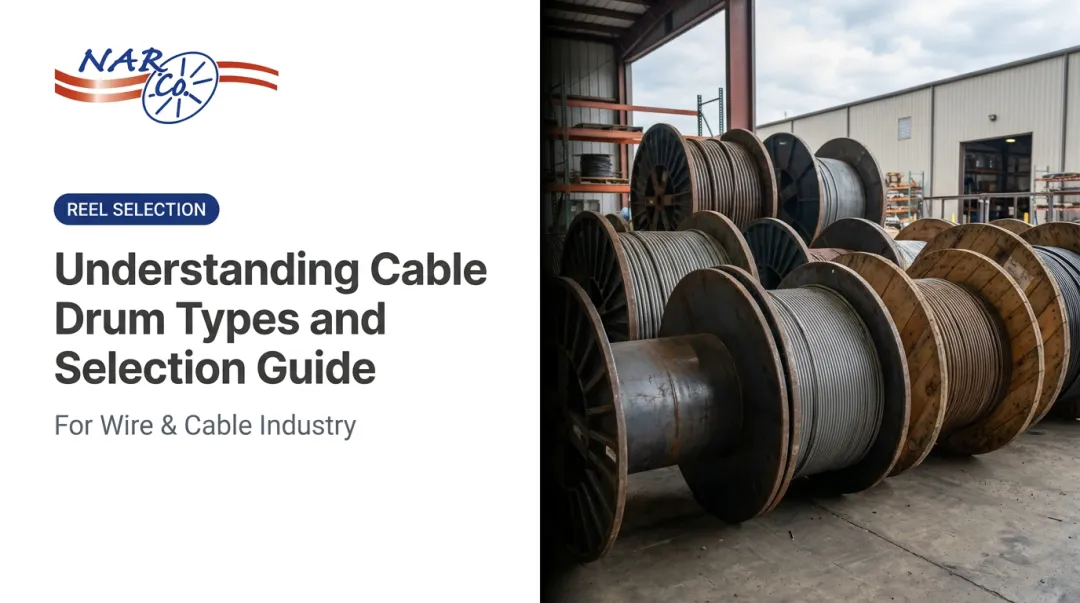
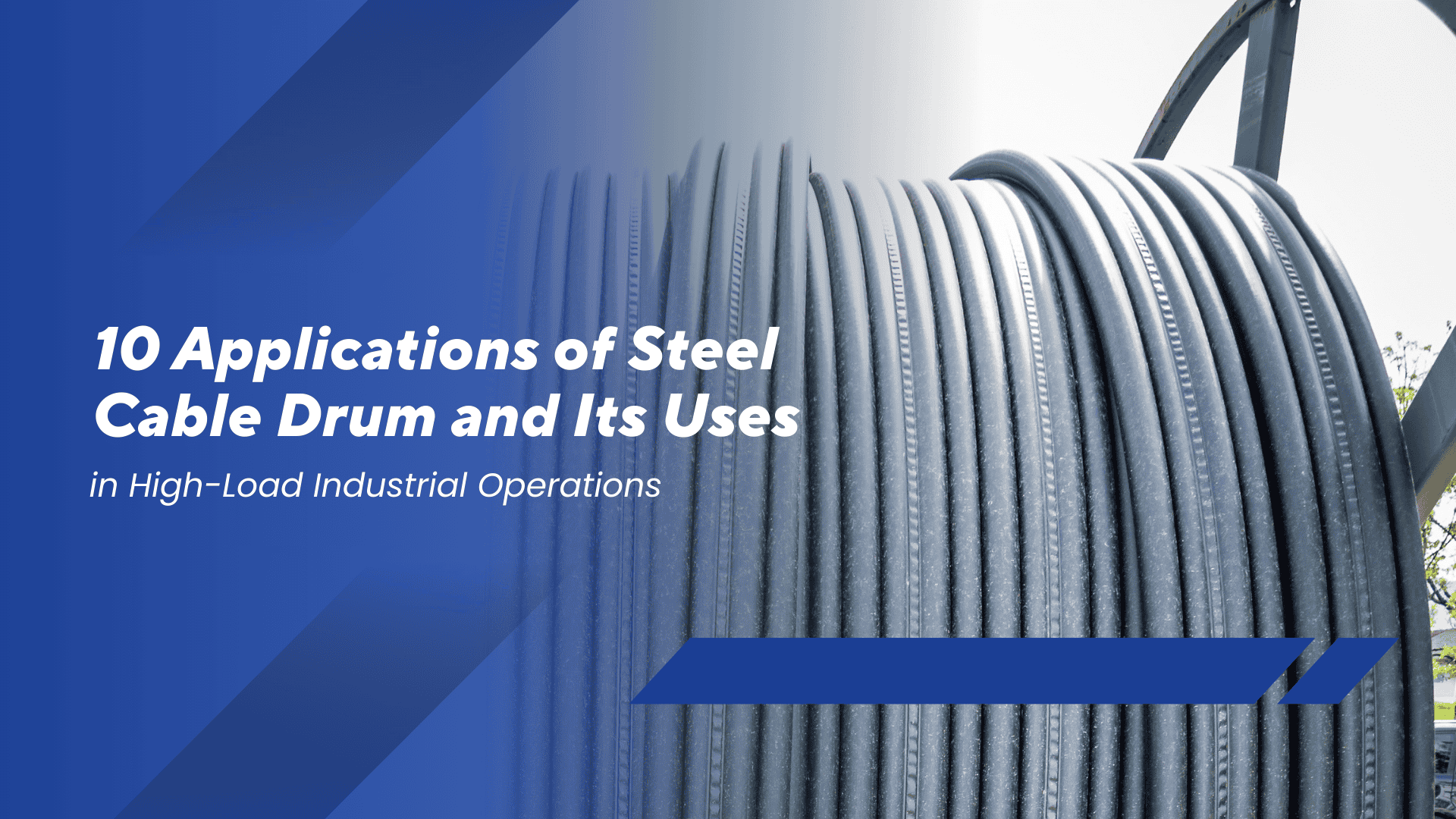
Steel cable drums play a major role in managing high-capacity cables across manufacturing floors, infrastructure projects, and field installations. For operators in wire and cable manufacturing, power transmission equipment, telecommunications, and metal processing, drum performance directly affects cable integrity, handling speed, and operational safety.
In industrial hubs across Ohio, Georgia, South Carolina, and Tennessee, these systems must withstand continuous mechanical load, harsh environments, and demanding duty cycles. From controlled factory winding to on-site payout and retrieval, steel cable drum applications enable precise cable handling at scale. Proper drum design reduces insulation damage, minimizes downtime during setup, and supports repeatable installations for power, data, rope, and tubing systems.
This article breaks down the fundamental principles, configurations, benefits, and selection criteria of steel cable drums, with a practical focus on real-world operating conditions faced by industrial buyers, plant engineers, procurement leaders, and project managers.
Key Takeaways
Steel cable drums are essential for HV and EHV cables because large flanges and cores maintain bend radius under high torque.
Fully machined steel reels (DIN 46397) prevent vibration and uneven winding on extrusion and lay-up lines.
Steel drums withstand impact, debris, and uneven terrain in construction and mining without flange deformation.
Telecom backbone installations use steel drums to prevent micro-bending during long conduit and duct-bank pulls.
Steel drums deliver lower lifecycle cost through reuse, repairability, and reduced cable damage across projects.
5 Key Performance Attributes of Steel Cable Drums for High-Load Manufacturing
Steel cable drums are defined by a small set of measurable attributes that directly impact cable protection, payout efficiency, and operational safety. For manufacturers and installers handling large-diameter power, telecom, rope, and tubing products, these attributes determine whether a drum supports or limits throughput.
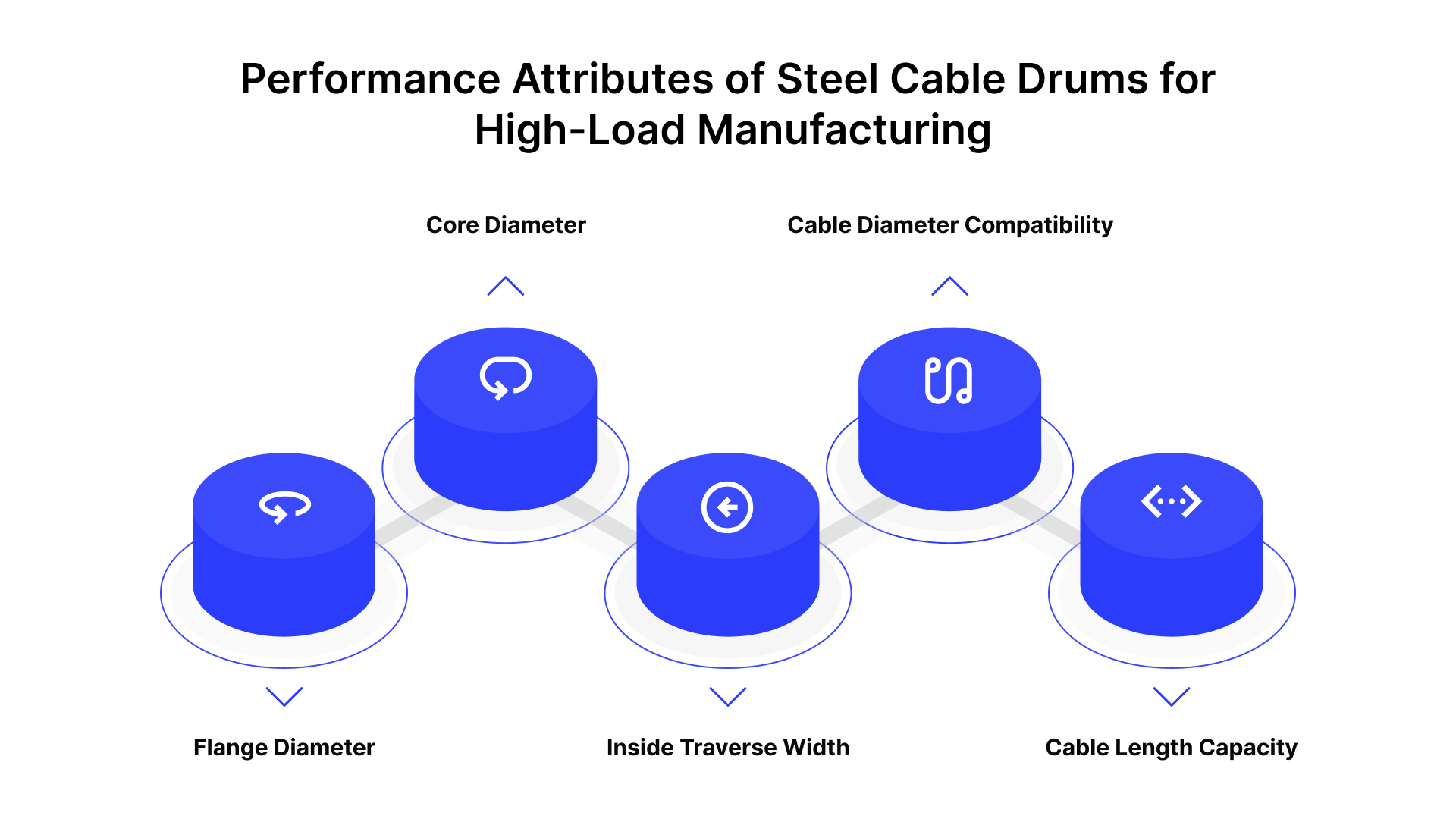
Essential performance attributes include:
Flange Diameter: Controls bend radius compliance and load containment. Larger flanges reduce edge stress and prevent cable slippage during high-torque payout in power transmission and mining applications.
Core Diameter: Sets the winding radius and compression profile. Proper core sizing protects conductor geometry and insulation integrity for armored cables, steel wire rope, and thick-wall tubing.
Inside Traverse Width: Ensures uniform layering across the drum face. Accurate traverse spacing prevents cable overlap, crush points, and payout hesitation during rapid field setup.
Cable Diameter Compatibility: Drum design must match the external cable diameter to maintain even tension and prevent deformation under static and fluctuating loads.
Cable Length Capacity: Determines how much cable can be stored without exceeding mechanical stress limits. Optimized capacity reduces reel changeovers, improving production and installation cycle times.
When engineered correctly, these attributes allow steel cable drum applications to deliver consistent payout, lower damage rates, and predictable performance across manufacturing floors and infrastructure sites.
Now we’ll examine the different industrial configurations for manufacturing, transport, and field installation.
Industrial Configurations of Steel Cable Reels for Manufacturing and Transport
Steel cable reels are manufactured in multiple configurations to match handling, installation, and operational constraints across production plants and job sites. Selecting the right configuration directly impacts setup time, labor efficiency, and cable protection in demanding industrial environments.
The five principal steel reel configurations include:
Collapsible Steel Reels
Designed for disassembly or folding, these reels reduce return freight costs and storage footprint. Commonly used by wire and cable manufacturers shipping bulk reels across Ohio and Tennessee distribution networks.
Portable Steel Reels
Built with integrated lifting handles for manual transport. Ideal for short-run telecom, control cable, and tubing installations where rapid repositioning is required.
Live Connection Steel Reels
Enable electrical continuity while the cable remains wound or partially opened. These are essential in steel cable drum applications involving temporary power distribution, testing environments, and mobile equipment.
Reel and Cable Assemblies
Supplied as an integrated system with cable and attached accessories such as work lights or connectors. This configuration reduces field assembly time and minimizes installation errors.
Storage Steel Reels
Used for non-cable materials such as steel strapping, plastic sheet stock, or paper rolls within metal processing and construction material facilities.
With configurations clear, let’s look at the benefits these steel cable drums provide in industrial environments.
5 Benefits of Steel Cable Drums in Industrial Environments
Steel cable drums deliver measurable operational advantages across manufacturing, logistics, and field installation when uptime, safety, and material protection are non-negotiable. For high-volume cable, rope, and tubing operations, these benefits translate directly into lower total cost of ownership.
Key industrial benefits include:
Reduced Cable Damage Rates
Steel drums maintain structural integrity under high load, minimizing flange flex and core distortion. This reduces insulation abrasion, conductor flattening, and scrap during winding and payout.
Improved Installation Efficiency
Smooth rotational stability enables faster, controlled payout with less operator intervention. This shortens setup times and supports predictable installation schedules on construction and transmission sites.
Higher Load-Bearing Capacity
Steel construction supports heavier cable weights and longer lengths without deformation, required for power transmission, mining, and large-diameter rope systems.
Enhanced Safety Performance
Stable drum geometry and controlled payout reduce sudden cable release, lowering ergonomic strain and incident risk compared to improvised or underspecified reels.
Longer Service Life
Steel drums withstand repeated duty cycles, harsh outdoor conditions, and rough handling, reducing replacement frequency across multi-project lifespans.
When high-tension cable processes experience vibration, uneven winding, or flange fatigue, Narco addresses the issue by supplying steel drums for extrusion, drum twisting, and lay-up, along with fully machined steel reels built to DIN 46397. For wire, cable, rope, and tubing manufacturers, these balanced drums are engineered to handle continuous duty cycles and high torque without distortion. This alignment of drum design to process load improves payout consistency, protects cable integrity, and stabilizes line throughput.
Now, let’s look into five major industry applications where these drums are essential.
10 Major Industry Applications of Steel Cable Drums in Heavy-Duty Production and Infrastructure
Steel cable drums are engineered to meet the operational demands of industries where cable weight, length, and duty cycles exceed standard handling limits. Their application varies by sector, but performance expectations remain consistent: durability, control, and safety at scale.
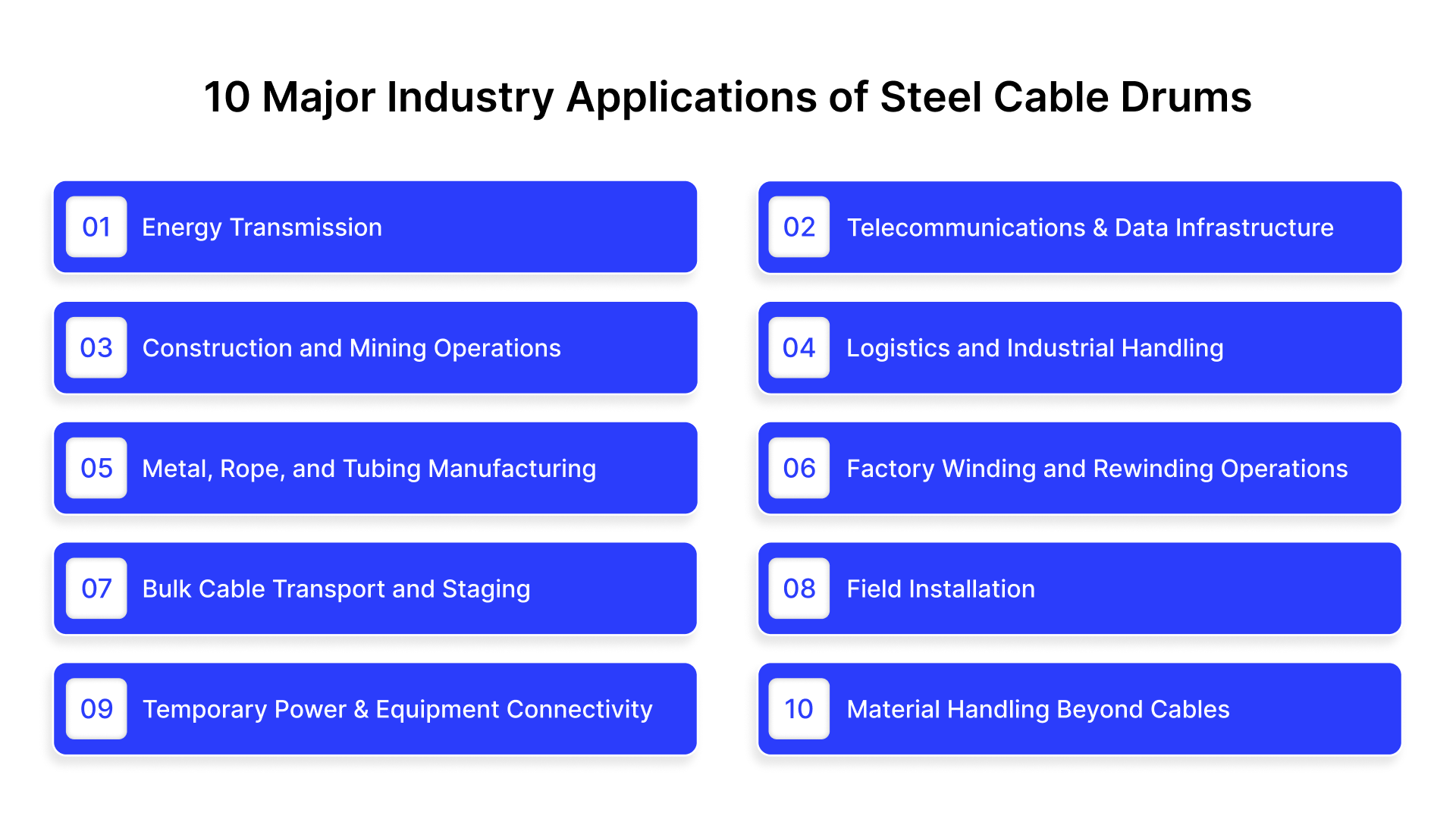
Ten major industry applications include:
1. Energy Transmission
Steel cable drums play a foundational role in power generation, transmission, and substation projects where conductor weight and length create extreme handling demands. They are designed to support long cable runs while preserving electrical and mechanical integrity throughout deployment.
High Load Capacity: Supports multi-ton HV and EHV cable lengths without flange deflection or barrel deformation.
Bend Radius Compliance: Drum barrel diameters maintain minimum bend radius during payout, preventing conductor fatigue and insulation damage.
Controlled Field Deployment: Enables stable payout during trenching, pole stringing, and substation terminations without cable twist or overrun.
2. Telecommunications and Data Infrastructure
Telecom and data installations require precise cable handling to avoid performance degradation during large-scale network rollouts. Steel cable drums provide consistent payout and structural stability for fiber, hybrid, and multi-core data cables.
Micro-Bend Prevention: Rigid flanges preserve uniform winding layers, reducing compression-induced signal loss.
Consistent Payout Control: Supports smooth rotation during long-distance pulls through conduit, duct banks, and aerial routes.
High-Density Cable Support: Accommodates armored and multi-core telecom cables used in backbone and metro deployments.
3. Construction and Mining Operations
In construction and mining environments, cable drums must withstand impact, debris, and constant relocation. Steel cable drums provide the durability and stability required for repeated setup and retrieval cycles.
Impact Resistance: Steel construction tolerates drops, vibration, and abrasive contact common on active job sites.
Terrain Stability: Maintains alignment during deployment on uneven ground, preventing flange damage or cable slippage.
Repeated Handling Cycles: Supports frequent load-in and load-out without structural degradation.
4. Logistics and Industrial Handling
Steel cable drums are widely used in yards, warehouses, and transport hubs to manage bulk cable inventory efficiently. Their rigid construction ensures predictable handling across storage, transport, and staging operations.
Forklift Compatibility: Resists ovalization and rim damage during clamp or tine-based handling.
Transport Durability: Maintains load geometry through repeated truck, rail, and yard transfers.
Inventory Control: Enables dense stacking and standardized footprints for large-scale cable storage.
5. Metal, Rope, and Tubing Manufacturing
Steel cable drums are integral to maintaining product geometry during the production and storage of metal-based materials. They support winding, storage, and downstream processing without introducing deformation or stress.
Tension Integrity: Prevents layer collapse during winding of steel wire rope and reinforced tubing.
Dimensional Stability: Preserves coil shape during extended storage prior to secondary operations.
Process Compatibility: Supports extrusion take-up, lay-up, and rewinding processes.
6. Factory Winding and Rewinding Operations
Manufacturing environments require repeatable winding performance to maintain throughput and quality. Steel cable drums enable controlled tension and uniform layering across continuous production lines.
Uniform Winding Geometry: Machined barrels support even layer build-up at production speeds.
Yield Optimization: Proper drum sizing reduces crossovers, rework, and scrap rates.
Dynamic Balance Support: Minimizes vibration, protecting equipment and improving consistency.
7. Bulk Cable Transport and Staging
High-value cable requires protection during regional transport and extended yard staging. Steel cable drums provide structural reliability across repeated handling and environmental exposure.
Structural Protection: Prevents flange collapse during long-term outdoor storage.
Regional Transport Reliability: Designed for repeated movement across industrial logistics corridors.
Weather Exposure Resistance: Maintains performance in variable outdoor conditions.
8. Field Installation
Field deployment demands controlled payout to minimize installation damage and labor risk. Steel cable drums enable predictable rotation during infrastructure builds and utility projects.
Overrun Prevention: Drum mass and balance reduce uncontrolled rotation during long pulls.
Twist Mitigation: Maintains cable lay integrity during directional installation.
Jobsite Safety: Predictable payout reduces manual handling hazards.
9. Temporary Power and Equipment Connectivity
Temporary power setups require repeated winding and unwinding without compromising cable condition. Steel cable drums support flexible deployment across test environments and maintenance operations.
Live Connection Support: Allows partial payout without fully unwinding the cable.
Repeated Deployment Cycles: Withstands frequent handling without fatigue.
High-Amperage Cable Handling: Supports thick insulation and heavy conductor assemblies.
10. Material Handling Beyond Cables
Beyond electrical applications, steel cable drums are used to manage a range of industrial materials.
Their rigidity and load capacity make them adaptable across multiple production environments.
Wire and Strapping Management: Maintains tension control for steel strapping and industrial wire.
Tubing and Sheeting Storage: Prevents deformation of flexible materials.
Cross-Industry Adaptability: Used in metal processing, construction materials, and fabrication facilities.
With applications in mind, it’s important to understand the selection criteria for steel cable reels and drums.
Selection Criteria for Steel Cable Reels and Drums
Selecting the right steel cable reel requires aligning mechanical load behavior, electrical capacity, and operating conditions with real-world duty cycles. For manufacturers and installers across power, telecom, rope, and tubing systems, incorrect specification directly leads to cable failure, unsafe operation, and throughput loss.
Mechanical and operational requirements to evaluate:
Operating Environment: Assess indoor vs. outdoor use, exposure to hazardous conditions, temperature variation, moisture, dust, or corrosive materials common in construction and mining sites.
Duty Cycle and Speed: Define how often the reel pays out and retracts. The maximum recommended operating speed is 150 feet per minute to prevent overheating, vibration, and uneven layering.
Roller-Assisted Launch: Rollers enable faster setup, reduce operator fatigue, and maintain consistent cable length during payout. Compared to reel jack stands, rollers improve safety and spool protection when used with tie-down kits.
Electrical performance criteria:
Voltage and Amperage Rating: Must match system load requirements for power, control, or communication signals.
Cable Construction: A single ground conductor is ideal where applicable. Required AWG size depends on amperage demand and total conductor count.
Steel cable length specification must include:
Active Length – Difference between minimum and maximum operating payout
Inactive Length – Always extends outside the reel, even when fully retracted
Safety Wrap – Ensures cable remains secured to the drum at full payout
Sag Factor (Stretch Applications Only) – Add 10% to active and inactive lengths
Lift Height – Distance from cable lay-up point to spool center; maximum 4 feet
Spool Ends / Hook-Up Length – 2–3 feet of cable required at both ends for connection
Next, see how Narco can optimize steel cable drum applications with engineering and lifecycle support.
How Can Narco Optimize Steel Cable Drum Applications with Proven Lifecycle Support
When steel cable drums are underspecified or poorly maintained, manufacturers see uneven payout, vibration, flange damage, and unplanned downtime. Narco helps wire, cable, rope, and tubing operations align steel cable drum applications and uses with real process demands, load, torque, speed, and duty cycle. With roots in steel reel repair and expanded capabilities in fabrication and machining, Narco supports both new-build and existing drum fleets.
Steel Cable Drum Solutions from Narco
Steel Drums for Extrusion, Drum Twisting, and Lay-Up: Engineered for high-tension processes requiring dimensional stability and consistent winding under continuous duty.
Fully Machined Steel Reels (DIN 46397): Highly balanced multiwire reels designed for high-speed manufacturing lines with tight vibration and payout tolerances.
Metal Flanged and Enhanced Metal Flange Reels (DIN 46395): Suitable for heavy cable, wire, and rope applications in both in-process handling and shipping.
Corrugated Shipping Reels (NEMA WC 26 – RM/RMT): Optimized for freight efficiency while maintaining structural integrity across repeat shipping cycles.
Custom and Collapsible Drums: Built to customer specifications with drawings supplied to ensure application fit and operational clarity.
Reconditioning and Repair Services (3”–96”): Flange straightening, arbor tube repair, welding, machining, blasting, painting, stenciling, and fluid balancing to extend drum life and reduce replacement spend.
By matching steel cable drum design, standards, and service strategy to your application, Narco helps industrial teams reduce scrap, stabilize production, and maximize return on steel cable drum assets.
Conclusion
For industries spanning wire and cable manufacturing, power transmission, telecommunications, and rope and tubing products, the right drum design reduces damage rates, improves installation speed, and extends asset life across demanding duty cycles.
When mechanical requirements, electrical criteria, and length specifications are correctly aligned, steel cable drum applications deliver measurable ROI through lower scrap, fewer safety incidents, and predictable field performance.
When repeated shipping cycles cause rim damage, arbor wear, or drum collapse, Narco supports power transmission, telecommunications, and construction teams with metal flanged and enhanced metal flange reels to DIN 46395 and corrugated shipping reels compliant with NEMA WC 26 (RM/RMT).
Contact Narco to recondition or customize steel cable drums engineered for your exact application, load, and lifecycle requirements.
FAQs
1. How do steel cable drums impact damage claims during long-distance freight movement?
Steel drums support higher static loads, resist flange deformation during forklift handling, and maintain dimensional tolerances vital for long-haul rail and truck transport cycles reliably.
2. Can steel cable drums be certified to meet utility and infrastructure compliance standards?
Yes. Steel drums can be fabricated to meet utility, DOT, and internal plant safety standards, including load ratings, grounding provisions, and traceable material certifications requirements.
3. What should procurement teams specify to avoid integration issues with existing equipment?
Procurement should specify drum compatibility with automated payoff stands, winding line mandrels, and crane lifting points to avoid downstream retrofitting costs and production bottlenecks later.
4. Are steel drums viable for repeated outdoor reuse across multiple projects?
Steel drums tolerate repeated outdoor exposure, UV, moisture, and abrasive handling better than composite alternatives, making them suitable for multi-project reuse programs industrially nationwide today.
5. How should the total cost of ownership be evaluated for steel cable drums?
Total cost includes fabrication, return logistics, repair cycles, lifespan, and avoided cable damage. Steel drums often outperform cheaper options over multi-year installation horizons, consistently long-term overall.