Introduction
Choosing between steel and plastic drums feels routine — until the cable inside weighs several tons per reel.
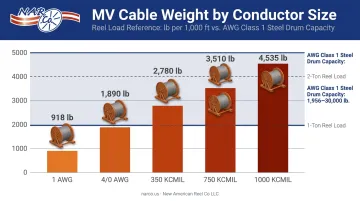
Medium voltage cable (typically rated 5–46 kV) operates in a different weight class than general-purpose wire. Southwire's product data shows 25 kV copper MV cable ranging from 918 lb per 1,000 feet at 1 AWG up to 4,535 lb per 1,000 feet at 1000 KCMIL. A single loaded reel can easily exceed two tons.
Select the wrong drum, and you're risking flange failure, cable jacket damage, or grounding hazards mid-installation.
Prysmian's handling guidelines confirm that improper drum management (dropped flanges, ropes placed over cable in transit, horizontal transport) can render cable unserviceable and drums undeliverable.
This article covers the material differences between steel and plastic drums, load and safety considerations specific to MV cable, grounding requirements, and a practical decision framework for selecting the right drum for your application.
Key Takeaways
- Steel drums carry documented load capacities up to 30,000 lb and are the stronger fit for heavy MV cable applications
- Plastic drums are lighter and corrosion-resistant but lack verified load ratings for heavy MV configurations; always confirm capacity with manufacturer specs before use
- Grounding is a site safety requirement driven by project procedures, not automatically satisfied by either drum material
- Reconditioning steel drums extends usable life and reduces cost-per-use compared to repeated new purchases
- Select drums based on rated capacity, cable SKU weight, bend radius, and handling environment — not material alone
Steel vs. Plastic Drums for MV Cable: Quick Comparison
| Factor | Steel | Plastic |
|---|---|---|
| Load capacity | Up to 30,000 lb (AWG Class 1 specs) | Lower ratings; verify per manufacturer |
| MV cable suitability | Well-documented for heavy configurations | Limited authoritative data for heavy MV |
| Conductivity | Inherently conductive; groundable | Non-conductive; grounding provisions required |
| Corrosion resistance | Requires maintenance or coating in humid environments | Naturally resistant to rust and moisture |
| Upfront cost | Higher | Lower |
| Reusability | High; reconditioning extends life further | Shorter service life; UV and impact degradation |
| Asset management | Returnable reel programs with tracked values | Typically single-use or limited-cycle |
A Note on Cost
Southwire's returnable steel reel program gives a useful cost reference. Their Canada reel return policy lists a deposit value of $21,750 for an S1100 model (3,941 lb). These are refundable asset values, not retail prices — but the figure shows that major cable manufacturers treat steel drums as tracked capital equipment, not disposable packaging.
A meaningful cost comparison weighs total spend across all reuse cycles — including reconditioning, return logistics, and damage forfeiture risk — not just the upfront purchase price.
Steel Drums for Medium Voltage Cable
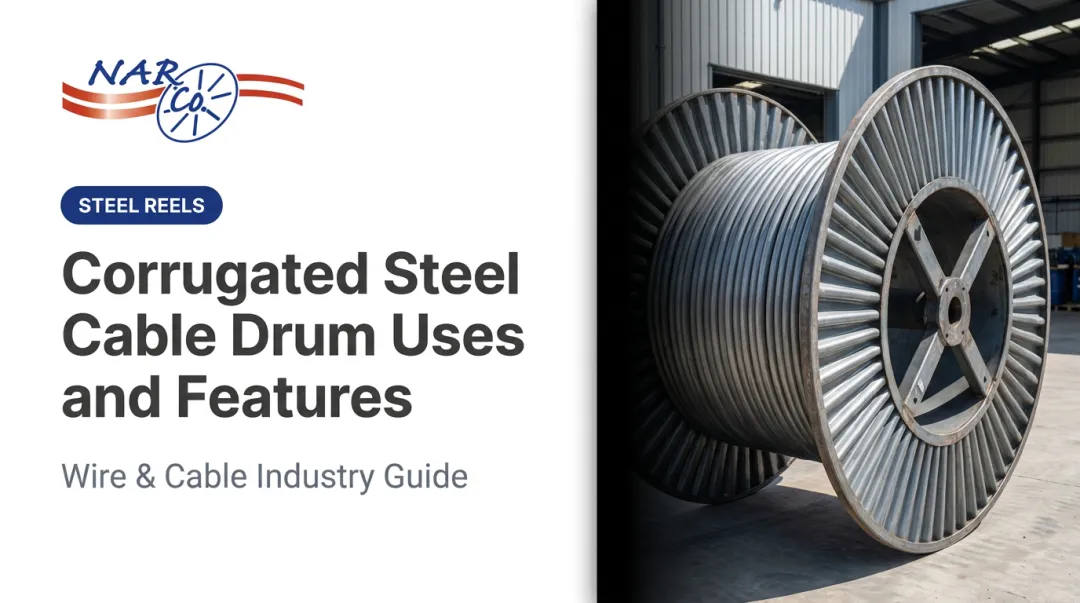
Steel cable drums are engineered cylindrical reels designed to store, transport, and dispense high-weight, large-diameter cables in power distribution and infrastructure projects. They're distinct from industrial liquid storage drums — construction focuses on structural integrity under dynamic load, not containment.
Construction and Load Capacity
NEMA WC 26-2008, the binational wire and cable packaging standard, defines "maximum strength capacity" as the total conductor or cable weight a reel size and construction can carry. AWG Class 1 steel fluted returnable reels are independently rated from 1,956 lb to 30,000 lb, providing traceable load documentation that plastic alternatives rarely match.
That capacity matters because MV cable weight scales fast. A 1,000-foot run of 1000 KCMIL 25 kV copper cable weighs over two tons on its own. Without verified drum capacity, flange deformation or barrel failure during transport isn't a theoretical risk — the failure modes are well-documented.
Grounding During Installation
Steel's conductivity is a practical advantage in MV cable work. OSHA 29 CFR 1926.962 governs grounding of transmission and distribution lines and equipment for employee protection — and steel drums can be incorporated into grounding schemes at the jobsite without additional hardware. Plastic drums require external provisions to achieve the same result.
That said, the drum material itself doesn't determine grounding compliance. Project-specific safety procedures govern what's required. Steel simply reduces the steps needed to get there — which also has implications for drum lifecycle costs over repeated deployments.
Longevity and Reconditioning
Steel drums that return from service with flange damage, rim wear, or surface corrosion don't have to be scrapped. Narco, based in Antwerp, Ohio, reconditions steel reels and drums from 3" to 96" in diameter. Their process includes:
- Flange straightening and press work
- Rim and damage repairs
- Blasting and repainting
- Stenciling of tare weight and identification markings
- Dynamic balancing
Custom work — arbor tube replacement, drive pin hole repair, arbor hole resizing, welding and machining — handles more severe damage. In many cases, reconditioning costs a fraction of new drum pricing while restoring full structural and load ratings.
Primary Use Cases
Steel drums dominate in:
- Underground MV feeder installation
- Power utility grid projects
- Industrial plant wiring
- Wind and solar farm cable deployment
- EPC contractor projects with high reel reuse expectations
Plastic Drums for Medium Voltage Cable
Plastic cable drums — typically manufactured from ABS or engineered polymer — are lighter, naturally corrosion-resistant, and cost less upfront. Narco supplies plastic reels as Midwest sales agent for Inosym, covering process reels, magnet wire reels, fine wire reels, and packaging spools — so both material options are available through a single source.
Where Plastic Works
The corrosion resistance argument is legitimate. In coastal environments, high-humidity facilities, or chemical-exposure settings where steel would require significant rust-prevention treatment, plastic offers a genuine operational advantage. For one-way shipping where drum return isn't logistically viable, lower initial cost is also a real factor.
The MV Cable Limitation
The research base for plastic drums in heavy MV cable applications is thin. NEMA WC 26 recognizes engineered plastic reels as a category, but authoritative load ratings for heavy MV power cable configurations on plastic drums are not widely published.
Before using a plastic drum for MV cable, verify:
- The drum manufacturer's published load rating covers your cable SKU's weight per 1,000 feet
- The barrel diameter meets or exceeds the cable's minimum bend radius
- The drum's structural rating accounts for the full loaded weight, not just the cable alone
If those numbers aren't available from the manufacturer, that's not a detail to work around.
Grounding Provisions Are Non-Negotiable
Plastic is non-conductive, and that creates a specific obligation. Non-conductivity doesn't make plastic drums safer for MV cable; it means grounding requires additional steps.
Anti-static additives, conductive grounding straps, or other provisions must be in place when plastic drums are used in MV environments. Treating the non-conductive material as inherent protection is a category error.
Practical Use Cases for Plastic
- Lighter MV cable configurations (smaller conductor sizes, shorter run lengths)
- Single-use or one-way shipping where return logistics are impractical
- High-corrosion environments where steel requires intensive maintenance
- Applications where the manufacturer provides explicit, verified load ratings for the specific cable
Steel vs. Plastic: Which Is Right for Your Application?
Neither material is universally correct. The decision depends on what the drum actually has to do.
Choose Steel When:
- Cable weight per reel is high — especially anything above 2,000 lb total loaded weight
- The drum will be reused across multiple projects
- Grounding integration at the jobsite needs to be straightforward
- The project involves outdoor storage, physical handling stress, or demanding transport conditions
- You want a reconditioning pathway to reduce cost per use over time
Choose Plastic When:
- Cable weight falls within the drum manufacturer's published rated capacity
- The application is genuinely single-use or one-way
- Corrosion risk to steel is the dominant concern (coastal, chemical, or high-humidity environments)
- Proper grounding provisions will be implemented and documented
The Cost Logic of Reconditioning
Once you've matched material to application, the next question is what that choice costs across the life of the project — not just the first purchase.
The upfront price gap between steel and plastic shrinks significantly over multiple reuse cycles. Steel drums managed through a return and reconditioning program — like the services Narco provides — convert capital replacement costs into lower refurbishment expenses. Plastic drums that reach end of structural life need full replacement. Over five or ten project cycles, that difference compounds.
Southwire's reel return program illustrates the asset-management logic: steel reels are tracked by serial number, assigned defined values, and returned for credit. Damage reduces or eliminates that credit, which creates a direct financial incentive to maintain drums properly. Disposable plastic offers no equivalent recovery — every end-of-life drum is a replacement cost, not a refurbishment.
Safety Reminder
Whatever drum material you select: your grounding protocol during MV cable installation must meet applicable electrical safety standards. The cable inside carries MV potential regardless of what the drum is made of. Plastic drum users must implement grounding provisions — the drum's non-conductivity does not protect against the cable's electrical characteristics.
Reconditioning as a Cost Strategy
For cable manufacturers and contractors running high-volume MV cable programs, drum reconditioning deserves a line item in the procurement model — not just a fallback when drums look worn.
Narco's reconditioning work covers the full range of damage that steel drums accumulate in service:
- Bent flanges and damaged rims
- Surface corrosion and worn arbor tubes
- Drive pin damage
Dynamic balancing after repair ensures the drum runs true under load, which matters when cable is being paid out at speed.
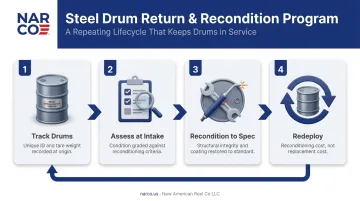
The case for a return-and-recondition program is straightforward:
- Track your drums — serial numbers, tare weights, and condition on return
- Assess at intake — determine what work each drum needs
- Recondition to spec — bring the drum back to functional standard
- Redeploy — the drum enters the next project cycle at reconditioning cost, not replacement cost
For operations managing dozens or hundreds of steel drums across ongoing MV cable projects, those savings add up fast. Narco has been providing steel drum fabrication and reconditioning services to wire and cable manufacturers since 1999 — contact them at 419-258-2900 or mark@narco.us to work through the numbers for your program.
Frequently Asked Questions
What is the difference between steel and plastic drums for medium voltage cable?
Steel drums offer higher documented load capacity, natural conductivity for grounding integration, and longer service life suited to heavy MV cable applications. Plastic drums are lighter and corrosion-resistant but lack widely published load ratings for heavy MV configurations and require additional grounding provisions.
What are the benefits of using a steel drum for medium voltage cable?
Steel provides structural strength to carry heavy MV cable without deformation, inherent conductivity that simplifies grounding at the installation site, and long-term reusability through professional reconditioning — including welding, machining, and dynamic balancing — that reduces total cost across multiple project cycles.
Do plastic drums need to be grounded when used for medium voltage cable?
Yes. Plastic is non-conductive, which means anti-static additives, conductive grounding straps, or other provisions must be in place when plastic drums are used with MV cable. Plan for these provisions before deployment, not after.
Can plastic drums handle the weight of medium voltage cable?
Standard plastic drums carry lower weight ratings than steel equivalents. Always verify the drum manufacturer's published load rating against your cable's actual weight per 1,000 feet before using plastic for heavier MV configurations.
How long do steel cable drums last compared to plastic ones?
Steel drums built to NEMA WC 26 and AWG Class 1 specifications can be reconditioned multiple times through welding, machining, and dynamic balancing, extending usable life across many project cycles. Plastic drums degrade faster under UV exposure and repeated heavy loads, making them better suited to shorter-cycle or single-use applications.
What should I look for when sourcing drums for medium voltage cable?
Prioritize these factors when evaluating drum options:
- Published load rating that covers your cable's actual weight
- Barrel diameter that meets the cable's minimum bend radius
- Material suitability for your storage and transport environment
- Grounding capability or provisions for non-conductive materials
- Access to reconditioning services if managing steel drums across multiple projects